
In the 1970s, researchers ran a deceptively simple experiment.
A mother played with her baby. She smiled, talked, and responded. The baby was engaged, expressive, and connected.
Then the researcher asked the mother to stop reacting.
No smiling.
No eye contact.
No response.

Within seconds, the baby tried harder to reconnect with bigger smiles, reaching, and vocalizing. When nothing worked, the baby became distressed. Eventually, the baby shut down.
This is known as the Still Face Experiment, and it revealed something fundamental: For children, attention is not a luxury. It is a biological need.
Babies and children read facial expressions, eye contact, and responsiveness as signals of safety. When those signals disappear, their nervous system interprets it as something being wrong.
Fast Forward to Today: Phones, Presence, and “Phubbing”
Today, most parents are not sitting with blank faces.
We are sitting with phones.
Checking notifications at dinner.
Scrolling while a child is talking.
Finishing an email while saying, “Just a second.”
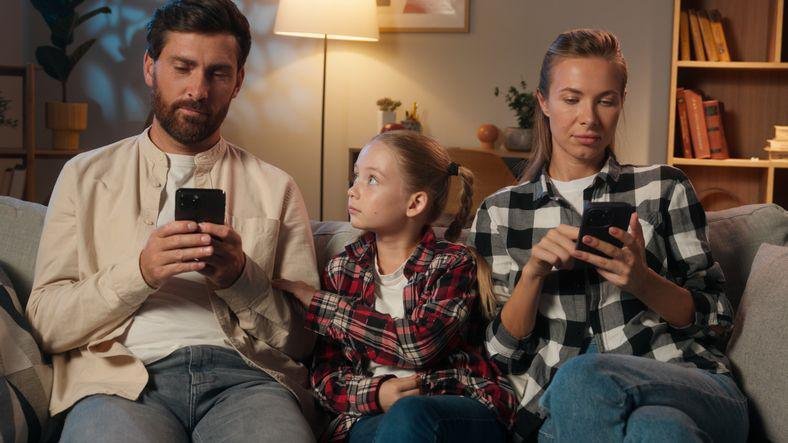
Researchers call this parental phubbing, meaning being physically present but mentally elsewhere because of a device.
A 2023 review of dozens of studies involving more than 50,000 families found consistent links between frequent distracted attention and:
Higher anxiety in children
More behavioral challenges
Lower self-confidence
Weaker social-emotional skills
Not because parents do not care.
But because, to a child’s nervous system, distracted presence can feel similar to that still, unresponsive face.
This Is Not About Being Perfect
Phones are part of modern life. Work, logistics, and communication depend on them.
The takeaway is not guilt. It is awareness.
Children do not experience love through our intentions. They experience it through our attention.
Attention does not need to be constant to be powerful. It needs to be intentional.
Small Rituals That Create Real Connection
You do not need to go tech-free all day. Protect a few high-impact moments where attention is fully shared.
Dinner: A Daily Anchor
Put phones on the counter or in another room before sitting down.
Set music or timers in advance.
Use a simple device drop zone for everyone.
Ask one consistent question: “What was the best part of your day?”

Bedtime: Emotional Open Space
Stop phone use 10 to 15 minutes before the routine begins.
Keep phones out of the bedroom or on silent.
Slow down with reading, talking, cuddling, and eye contact.
This is often when kids share what is really on their minds.

Movie or Show Time: Shared Experience
Decide upfront that there is no scrolling.
Watch together like you are in a theater.
Talk about favorite moments afterward.

Homework Time: Available, Not Multitasking
Put your phone in another room.
Sit nearby, even if you are not actively helping.
Avoid half listening while checking messages.

Car Rides: Low-Pressure Connection
Skip the phone at stoplights unless it is urgent.
Talk, sing, play a game, or sit quietly together.

When Your Child Says, “Look!”
This is the micro-moment that matters most.
When they say, “Watch this,” pause. Make eye contact. Actually look.
Ten seconds of full attention is more powerful than you think.
Why This Matters Beyond Parenting
Attention is the currency of modern life, both at home and at work.
Children learn what attention looks like from us. So do teams, colleagues, and communities.
Being present is not about being available all the time.
It is about being fully present for the moments that matter.
Because to a child’s nervous system, and to the people around us, attention says:
“I’m here. You matter.”

Blog written by:
Lisa Anderson
Owner of A Healing Place